Showing posts with label history. Show all posts

Wednesday, April 02, 2008

Lillian Asplund Leaves Titanic Memories as Its Last Living Survivor


Lillian Asplund was born in southern Sweden. Her father was a laborer who had dreams of moving the family to California so he could build a better future for his family as part of the American dream. He copied what California had to offer his family from a brochure, apparently so he could tell his wife about it. The family planned the move to America. Ms. Asplund's father bought third class tickets for himself, his wife, his four sons and his daughter on the maiden voyage of the state of the art ship, Titanic.

Lillian Asplund never talked about her trip from Sweden to America. She never talked about the night the Titanic sank taking with it her father and three older brothers. She, her mother and her baby brother were the only ones in that family to survive that night. When Ms. Asplund died at age 99 years of age, she was the last survivor of the Titanic who had memories of it. Only one other survivor remains, but he was a baby at the time. After her death, family members found a shoe box in which she had kept her memories from the night that defined the rest of her life. The contents of that shoe box are some of the rarest historical artifacts from the Titanic and are going up for auction soon.

Titanic Artifacts


Among them were notes Mr Asplund had copied from a flyer promoting the benefits of living in California, an American dream that enticed the family to set sail for a new life.

An incredibly rare and water-stained ticket for the luxury liner was also found. Only a handful of Titanic tickets are in existance as most of them sunk with the ship.

The paper documents recovered from his body miraculously survived for 12 days after the disaster because Mr Asplund's lifejacket kept his coat's breast pocket out of the water.

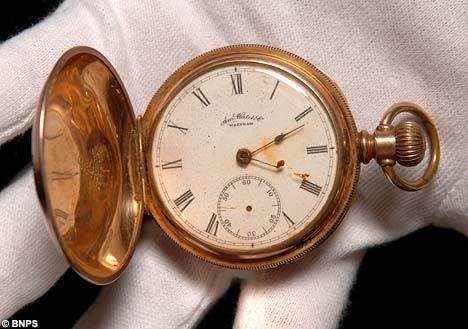
His pocket watch which stopped at 19 minutes past two - the exact time the liner sank - was also found on him. And a heart-rending note written by his grief-stricken mother in which she wrote of how she hoped to see her son again in heaven formed part of the collection.

The stunning archive includes a sad photograph of Lillian, her mother Selma and three-year-old brother Felix, who both survived, at her father's grave in 1912.


Titanic artifacts


Aside from the interest of the rare items from the Titanic, the belongs of Ms. Asplund could be pieced together to give insight into the events that happened that night culminating in the demise of her family.

Carl Asplund, a 40-year-old labourer, bought seven third class tickets for the Titanic's maiden voyage from Southampton to New York on April 10, 1912.

With him were wife Selma, then aged 38, and five children Filip, 13, Clarence, nine, Carl Edgar, five, Lillian, five, and Felix, three.

When the ship hit an iceberg and started to sink on the night of April 14, the Asplunds made a decision that the family should die together along with the 1,500 who perished.

But, according to an account Selma Asplund later gave, at the last moment Felix and Lillian were thrown into lifeboat 15 by an unknown person. Mr Asplund then pushed his wife forward to go with them.

She was haunted by the memory of the faces of her husband and three sons peering over the rail moments before the ship sank. Her husband's drowned and frozen body was recovered from the Atlantic 12 days later but there was no sign of his three sons.

Found in the pockets of his brown overcoat were his gold watch, two small keys for a safety box on board which stored the family's life savings, and his gold wedding ring.

Also recovered were two pocket books, one of which contained his notes on their new life in California. It is thought he had copied out a flyer designed to entice people to California to show his wife.

Part of it read: "California wants people like you, now is your time to come here. We have green grass and wild flowers at this time of year and all the facilities you can have.

"An ideal home we can offer you we think. Perhaps you don't believe what we are saying about our climate and city. Come and see it with your own eyes."

Other papers on him included a letter dated February 28, 1912, telling Mr Asplund he had as job waiting for him.

His possessions were handed to Mrs Asplund who also kept a cold and heartless letter from White Star Line dated May 11, 1912.

It told her they were giving her late husband's effects back as they were of "small value". Mr Aldridge said: "This letter states that the items were of low value which is ironic considering just how much they are worth now."

Mrs Asplund stored the moving letter written by her mother-in-law, Kristina Samuelsson, 16 months after the tragedy, in the box.

In it she states how much her eyes hurt from where she has been in mourning.

She wrote: "My nerves are so weak and my eyes are so poor because I have been crying so much but I hope that my grieving days soon will have an end and I will join the final rest where God has promised to wipe out the tears from all the faces."

Mrs Asplund died aged 91 on April 15 1964 - 52 years to the day of the disaster. After her death Lillian Asplund put her mother's wedding ring in the box alongside that of her father's gold band.

Felix Asplund died in 1983 aged 73 and Lillian passed away in 2006. The auction takes place on Saturday, April 19.


source

Tuesday, March 18, 2008

World War I Site Discovered

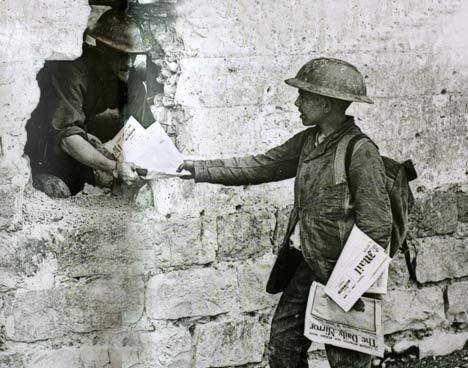
World War IBeneath the northern French town of Arras is a labyrinth of tunnels and caves that were used to help the allies defeat the Germans in The Great War. Those elaborate subterranean passageways hide an army of 25,000 British Soldiers right beneath the unsuspecting German army. From their hiding place beneath the front lines of that long ago war, the British were able to launch battles and raids from deep within the enemy territory.

In the years after the war these caves and tunnels were forgotten and built over. They have recently been rediscovered and escalated giving us an unequaled look into the world of the early 20th century warfare.


Next to a suburban supermarket, beneath a former camp site, the public can take a glass elevator from the 21st century straight down to the world of Tommy Atkins and bully beef.

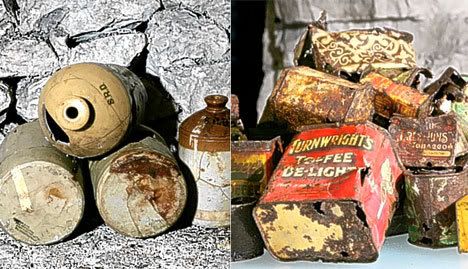
Clever lighting and sound effects have created a mesmerising insight into life on the Western Front.

Accompanied by a bilingual expert and an excellent audioguide, parties of 20 are able to weave their way through an authentic slice of the Great War.


ArrasAt the time, the Great War was considered the War to End All Wars. Of course, now we know that it was the war that began a series of wars in the 20th century. They didn't know that then. It is only in retrospect that we are able to see how one lead to the other. Its only in retrospect that we are able to learn the hard lesson that history taught us from that war. One of those lessons being that not ending the war by defeating the enemy only left us to have to fight the same enemy another day. It seems apparent to me that every war of the 20th century was a result of a lack of a proper ending to that war, including the Vietnamese and Korean wars. Yet, that war was quickly overshadowed by the second World War and many of the lessons learn were lost under the much larger and deadlier World War II.

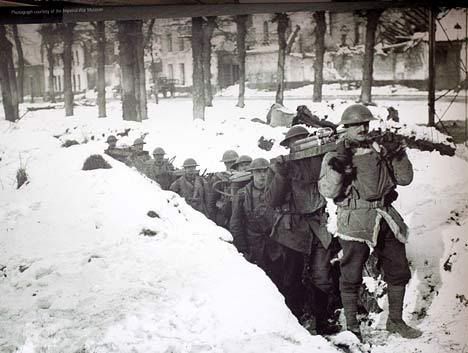
The Great War was the first modern war in which it was learned that frontal assaults were nothing less than suicidal.

The generals had learned a few lessons from the 1916 Battle of the Somme. Chief among them was the fact that frontal assaults on well-defended enemy trenches and artillery were mass suicide.

As the Western Front stalemate continued from the North Sea to the Swiss border, the French hatched a grand plan to win the war in 48 hours. They would smash through the German lines along the River Aisne in the spring of 1917.

The British would play their part with a colossal pre-emptive strike around Arras 50 miles to the north. A dazzling plan then took shape.


For almost a century, the ingenuity of the Battle of Arras has remained lost to our collective memories.

Today, Arras is an unremarkable town an hour's drive south of Calais. Most British tourists whizz past it on the autoroute as they drive to Paris and beyond. But if they look out of the window, they will glimpse some clues to the carnage in these parts.

Beautifully tended Commonwealth War Graves are dotted on either side. Soaring to the east is the stirring Canadian memorial to the 11,000 men who died in the heroic capture of Vimy Ridge. It is often said that Canada came of age as a nation that day.

Arras was a forlorn and battered frontier town. In 1914, it had been captured by the Germans, recaptured by the French and then put under British control to allow the French to concentrate elsewhere. In 1916, it was a shell of a place.

Civilians had been evacuated and British occupied the ruins while the Germans, who held the higher ground, sat to the East lobbing shells into the town.

It was just another stalemate situation on the Western Front. But, unseen by the Germans, something extraordinary was going on under the ground.


Arras
The plan to utilize the tunnels, sewers, cellars and caves created during the time of the Romans occupation was nothing short of ingenious. New Zealand Tunnelers were brought in to connect the caves, cellars and sewers with tunnels. In the end, it housed 25,000 allied troops. Five Hundred New Zealanders got the job done in record time. The entire plan was executed in complete secrecy.

Can you imagine the logistics of getting 25,000 soldiers down into those caves through a bakery? They managed to do it undetected. And there they waited until the appointed date to strict the Germans, Easter Sunday, 5.30am on April 9, 1917. They took the Germans completely by surprise.

The German guns, already hammered by their British counterparts, had little time to readjust their sights and bring fire down on an enemy which was suddenly a mile closer than anyone had expected.

There was heavy fighting, of course. Thousands of brave men, like Harry Holland, did not survive the day, but the losses were nothing like the Somme.

Germans surrendered bootless and still in night clothes. Up in the northern sector, around Vimy Ridge, the Canadians faced much stiffer opposition but they, too, had been helped by their own intricate tunnel arrangements leading up to the German lines.

Day One of the Battle of Arras was, without doubt, a great success. Within a couple of days, the Allies had advanced eight miles. By the woeful standards of that war, it was like capturing a continent.


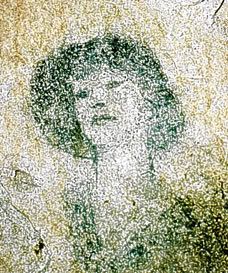
The war went on, but the Battle of Arras was a grand success in the context of the times. As the war and time went on, the tunnels were closed down, Arras was rebuilt and people forgot that day of bravery, sacrifice and grander. Some Frenchmen remembered the caves and used them again for shelter just a few short years later during the long hard days of World War II. Then, they were forgotten. In 1990, Alain Jacques began to investigate what had happened in that area during the Great War. He became curious when he couldn't find an answer as to why there were English words written on pillars and walls in that area. There was no written record of what had happened there. Studying the archives, he began to understand why places in that area were named names like 'Wellington'. That led to beginning of the excavations.


Arras


He had discovered the Blenheim quarry. Over the subsequent years, he would find much more. In 1994, a gas pipe repair led him to Thompson's Cave. Gradually, he worked out where the soldiers had emerged to meet the enemy.

His problem was that post-war Arras had simply expanded over the entire network and out into what had once been No Man's Land.

Much of the network has collapsed, much else is extremely unsafe and French laws meant that there could be no question of opening any museum underneath private homes.

Along with Arras's director of tourism, Jean-Marie Prestaux, Alain worked out that just one quarry - Wellington - had the potential for safe public access because it lay under a council-owned campsite.

Now, 18 years after Alain's first discovery, a £3 million visitor centre and a lift have been constructed. The Carriere Wellington, underground home of the Suffolk Regiment 91 years back, is, finally, open to the world.

"Everyone knows the Somme and Verdun," says Jean-Marie as he shows me round his beloved project.

"Now people from all over the world will learn of Arras. Even most French people know nothing of all this."

When I finally resurface, blinking and speechless, into the daylight, I ask Alain to show me where the inhabitants of Wellington would have emerged on that freezing dawn in 1917.

He takes me down several suburban streets, until we reach a crossroads on the Rue St Quentin.

"Here," he says, "this is where they came out to fight the enemy."

The scene could hardly be more poignant. Full of fun and laughter, it is a children's playground. Wherever he may be, I am sure poor Harry Holland would approve.


I hope to visit there and tour those tunnels the next time I'm in Europe.

source